

Overview
Giant cell arteritis is irritation and swelling, called inflammation, of the lining of the arteries. Arteries are blood vessels that carry blood from the heart to other parts of the body. Most often, giant cell arteritis affects the arteries in the head, mainly those in the temples. For this reason, giant cell arteritis used to be called temporal arteritis.
Giant cell arteritis often causes headaches, scalp soreness, jaw pain with chewing, and vision issues. If not treated, giant cell arteritis can lead to blindness.
Early treatment with corticosteroid medicines most often relieves symptoms of giant cell arteritis. The treatment might prevent loss of vision. But even with treatment, symptoms often return. This is called relapse.
People with giant cell arteritis need regular checkups with their healthcare professionals. They also need treatment for the condition and to prevent side effects of the corticosteroids.
Symptoms
The most common symptoms of giant cell arteritis are headaches and tenderness in both temples or other areas of the scalp. Symptoms can be bad.
Symptoms of giant cell arteritis may include:
- New, lasting head pain, most often in the temples.
- Scalp soreness.
- Jaw pain when chewing.
- Fever.
- Tiredness.
- Weight loss.
- Vision loss or double vision, mainly in people who also have jaw pain.
- Sudden, lasting loss of vision in one eye.
Pain and stiffness in the neck, shoulders or hips are common symptoms of a linked condition called polymyalgia rheumatica. About 40% to 50% of people with giant cell arteritis also have polymyalgia rheumatica.
When to see a doctor
If you get a new, lasting headache or any of the symptoms listed above, see your healthcare professional right away. If you're diagnosed with giant cell arteritis, starting treatment quickly may help prevent vision loss.
Causes
It's not clear what causes arteries to become inflamed in giant cell arteritis. But experts believe it may involve the immune system attacking the artery walls by mistake. Certain genes and factors in the environment might raise your risk of the condition.
Risk factors
Several factors can increase your risk of getting giant cell arteritis, including:
- Age. Giant cell arteritis affects adults, most often those older than 50. Most people with this condition get symptoms between the ages of 70 and 80.
- Sex assigned at birth. People assigned female at birth are about twice as likely to get the condition as are people assigned male at birth.
- Race and ethnic background. Giant cell arteritis is most common among white people in Northern Europe or those of Scandinavian descent.
- Polymyalgia rheumatica. Having this condition raises the risk of giant cell arteritis.
Complications
Giant cell arteritis can cause serious complications, including:
- Blindness. This is the complication of giant cell arteritis that causes the most worry. Less blood flow to the eyes can cause sudden, painless vision loss in one eye. Rarely, vision loss affects both eyes. Loss of vision most often is lifelong.
-
Aortic aneurysm. An aneurysm is a bulge that forms in a weakened blood vessel. The bulge most often is in the large artery that runs down the center of the chest and belly, called the aorta. An aortic aneurysm might burst, causing life-threatening bleeding inside the body.
Because this complication can happen even years after a diagnosis of giant cell arteritis, your healthcare professional may check your aorta with periodic imaging tests, such as echocardiogram, CT or MRI.
- Stroke. This complication of giant cell arteritis isn't common.
Diagnosis
Giant cell arteritis can be hard to diagnose because its early symptoms are like those of other common conditions. So your healthcare professional tries to rule out other possible causes of your symptoms.
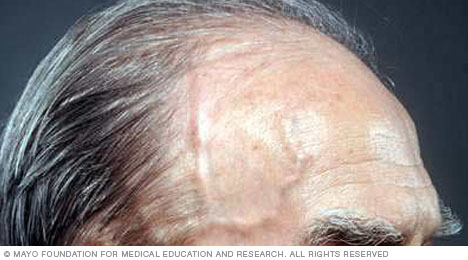
Besides asking about your symptoms and medical history, your healthcare professional does a physical exam and looks at the arteries around your temple, called temporal arteries. Often, one or both arteries are tender, with a lower pulse and a hard, cordlike feel and look.
Blood tests
The following tests might help diagnose your condition and check how your treatment works:
- Erythrocyte sedimentation rate. Often called sed rate, this test measures how quickly red blood cells fall to the bottom of a tube of blood. A high sed rate may mean you have swelling and irritation, called inflammation, in your body.
- C-reactive protein, also called CRP. This test measures a substance your liver makes when inflammation is present. Most people with giant cell arteritis have a high CRP.
Imaging tests
Healthcare professionals may use these imaging tests might help diagnose giant cell arteritis and check how well your treatment works:
- Doppler ultrasound. This test uses sound waves to make images of blood flowing through the blood vessels. It can help to check on temporal and other blood vessels that giant cell arteritis affects.
- CT angiography, also called CTA. This test is a CT scan that uses dye to make detailed images of your blood vessels. Let your healthcare professional know ahead of time if you're allergic to iodine contrast dye or your kidneys don't work well.
- Magnetic resonance angiography, also called MRA. This test is an MRI that uses dye and a magnetic field to make detailed images of your blood vessels. Let your healthcare team know ahead of time if you fear being in a small space, called claustrophobia. This is because the test takes place in a tube-shaped machine. Also tell your care team if you have metal in your body.
- Positron emission tomography, also called PET. This test checks for giant cell arteritis in large arteries, such as the aorta. A PET scan uses a sugar tracer liquid that has a tiny amount of radioactive substance. The liquid goes into a vein to make detailed images of larger blood vessels and show areas of swelling and irritation.
Biopsy
The best way to confirm a diagnosis of giant cell arteritis is by taking a small sample of the temporal artery. The sample goes to a lab for tissue study. You have this procedure as an outpatient with local numbing medicine. Most often, it's safe and causes little pain or scarring.
For people with giant cell arteritis, the artery often has a group of cells that are larger than usual. These giant cells give the condition its name.
It's possible to have giant cell arteritis and have a negative biopsy result. If the results aren't clear, your healthcare professional might suggest another temporal artery biopsy on the other side of your head.
An ultrasound of the temporal arteries also can check for giant cell arteritis. Some people have ultrasound instead of a biopsy.
Treatment
The main treatment for giant cell arteritis has been high doses of a corticosteroid medicine such as prednisone. Because you need fast treatment to prevent vision loss, your healthcare professional may have you start the medicine even before a biopsy confirms the diagnosis if it's likely that you have giant cell arteritis.
You're likely to begin to feel better within a few days of starting treatment. If you have visual loss before starting treatment with corticosteroids, your vision most likely won't improve.
You may need to take the medicine for months or sometimes longer. After the first month, your healthcare professional might start to lower the dosage little by little. The goal is to take the least amount of corticosteroid to manage the condition.
Some symptoms may return as the dosage is being lowered. This is when many people also get symptoms of polymyalgia rheumatica. Treating these flare-ups may involve raising the corticosteroid dose.
Corticosteroids can cause serious side effects, such as bone thinning, called osteoporosis, high blood pressure and muscle weakness. Your healthcare professional may watch your bone density and prescribe calcium and vitamin D supplements or other medicines to help prevent bone loss.
Tocilizumab (Actemra) is a medicine for giant cell arteritis that often lowers the amount of corticosteroid needed. You take it as a shot under your skin or get it through an arm vein. Side effects include raising the risk of infections.
People who have a history of a condition called diverticulitis shouldn't take tocilizumab. Diverticulitis is a condition in which small pouches in the wall of the large bowel become inflamed or infected.
Upadacitinib (Rinvoq) is a newer medicine for giant cell arteritis that you take by mouth. It often lowers the amount of corticosteroid needed. Side effects include raising the risk of infections and shingles. There also may be a higher risk of heart attack and blood clots with this type of medicine.
Both tocilizumab and upadacitinib lower the risk of flare-ups of giant cell arteritis. Your healthcare professional guides you to the best treatment for you.
Researchers are studying other medicines for treatment of giant cell arteritis.
Lifestyle and home remedies
The following might help you manage giant cell arteritis and cope with side effects of your medicine:
- Eat a healthy diet. Eating well can help prevent thinning bones, high blood pressure and diabetes. Focus on fresh fruits and vegetables, whole grains, and lean meats and fish. Limit salt, sugar and alcohol.
-
Exercise regularly. Regular aerobic exercise, such as walking, can help prevent bone loss, high blood pressure and diabetes. It also helps your heart and lungs. And many people find that exercise improves their mood and overall sense of well-being.
If you're not used to exercising, start out slowly and build up over time. Your healthcare professional can help you plan an exercise program.
- Get checkups. See your healthcare professional regularly to check for side effects of treatment and for complications.
Coping and support
Learning everything you can about giant cell arteritis and its treatment can help you feel more in control of your condition. Your healthcare team can answer your questions. Online support groups also might be helpful.
Know about side effects of the medicines you take. Tell your healthcare professional about changes to your health.
Preparing for an appointment
You might start by seeing your main healthcare professional. Your healthcare professional may send you to an eye specialist, called an ophthalmologist, for visual symptoms; a brain and nervous system specialist, called a neurologist, for headaches; or a specialist in diseases of the joints, bones and muscles, called a rheumatologist.
Here's some information to help you get ready for your appointment.
What you can do
When you make the appointment, ask if there's anything you need to do before you go in. For some tests used to diagnose giant cell arteritis, you might need to follow special instructions before the appointment.
Make a list of:
- Your symptoms and when they began.
- Key personal information, including any major stresses or recent life changes.
- All medicines, vitamins and other supplements you take, including dosages.
- Questions to ask your healthcare professional.
Take a friend or family member with you to help you remember the information you get.
For giant cell arteritis, questions to ask your healthcare professional may include:
- What's the most likely cause of my symptoms?
- What are other possible causes?
- What tests do I need?
- What treatments are there?
- Will giant cell arteritis come back?
- I have other health conditions. How can I best manage them together?
- Do I need to change my diet or take supplements?
- Do you have brochures or other information that I can have? What websites do you suggest?
Be sure to ask all the questions you have.
Be ready to answer questions, such as:
- Do you always have symptoms, or do they come and go?
- How bad are your symptoms?
- What, if anything, seems to make your symptoms better?
- What, if anything, seems to make your symptoms worse?
What you can do in the meantime
Ask your healthcare professional if taking a pain reliever such as acetaminophen (Tylenol, others), ibuprofen (Advil, Motrin IB, others) or naproxen sodium (Aleve) might help ease head pain or tenderness.
© 1998-2026 Mayo Foundation for Medical Education and Research (MFMER). All rights reserved. Terms of Use