


Overview
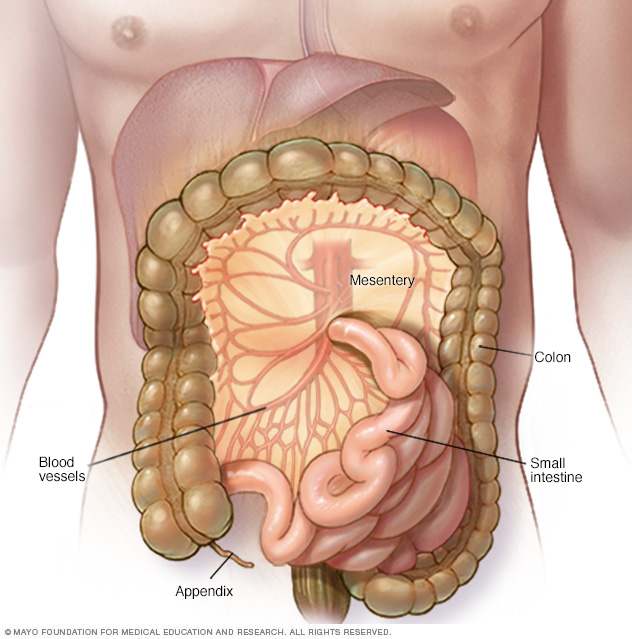
Sclerosing mesenteritis is an uncommon condition in which the tissue that holds the intestines in place becomes inflamed and forms scar tissue. This tissue is called the mesentery (mez-un-TER-ee). It's not clear what causes sclerosing mesenteritis (skluh-ROHS-ing MEZ-un-tuh-rie-tis).
Sclerosing mesenteritis can cause belly pain, weight loss, diarrhea, constipation and other symptoms. But many people experience no symptoms and may never need treatment.
In rare cases, scar tissue formed by sclerosing mesenteritis can block food from moving through the digestive tract. In this case, you may need surgery.
The condition goes by other names, including mesenteric panniculitis (puh-NIK-u-lie-tis) and misty mesentery.
Symptoms
Symptoms of sclerosing mesenteritis may include:
- Belly pain or tenderness.
- Bloating.
- Diarrhea.
- Constipation.
- Upset stomach and vomiting.
- Unintended weight loss.
- Fever.
Many people with sclerosing mesenteritis have no symptoms.
When to see a doctor
Many conditions can cause belly pain, weight loss and other symptoms of the digestive system. It's important to see your healthcare professional if you have symptoms that don't improve with self care and rest for a few days.
See your health professional if you have unintended weight loss.
Causes
The cause of sclerosing mesenteritis is not known.
The mesentery is one of the tissues lining the belly cavity. It is found at the back of the belly cavity. The purpose of the mesentery is to:
- Attach the small intestine and colon to the back wall of the belly cavity.
- House blood vessels and nerves that serve the small intestine and colon.
- Hold immune system tissues called lymph nodes and lymph vessels.
- Store fat cells that help regulate nutritional balance in the body.
Sclerosing mesenteritis happens when the mesentery becomes inflamed and forms scar tissue. Inflammation is typically the immune system's reaction to disease or injury. An inflammatory reaction increases blood flow, releases proteins that regulate cells' defenses and delivers disease-fighting cells. Inflammation is usually a part of a healing process. Long-term inflammation damages tissues.
What causes long-term inflammation in sclerosing mesenteritis is not known. Scar tissue from the inflammation usually appears as a single, relatively large mass. Sometimes there are multiple smaller clusters of scar tissue.
Diagnosis
In some cases, sclerosing mesenteritis is found during belly surgery or on imaging tests for other conditions.
Your healthcare professional will ask you questions about your symptoms and medical history. A diagnosis is based on the following:
- Physical exam. Your health professional will do a complete physical exam. This includes gently touching the belly to find the site of pain or tenderness. In some cases, a mass can be felt in the belly.
- Computerized tomography (CT). A CT scan is the primary tool for diagnosing sclerosing mesenteritis. This X-ray technology creates cross-sectional images of tissues. Sometimes signs of the condition are found when a person is getting a CT exam for symptoms not related to sclerosing mesenteritis.
- Tissue sampling. A tissue sample be removed for laboratory testing if the symptoms are severe or if CT imaging or symptoms suggests a cancer diagnosis. A tissue sample is usually removed with surgery done through small incisions. This procedure is called a surgical biopsy.
Treatment
The goal of treatment is to manage symptoms. You may not need treatment if you have no symptoms or complications from sclerosing mesenteritis.
Medicines
The most common treatment is a combination of tamoxifen (Soltamox) and a corticosteroid, such as prednisone. The dose of corticosteroid is reduced over three months because of side effects of long-term use.
Tamoxifen may increase the risk of blood clots. It is not prescribed to people at risk of blood clots or those who have a family medical history of blood clots. Other medicines may be used for people who cannot take tamoxifen or tolerate other side effects of the medicine. Research on the effectiveness of other treatments is limited.
Surgery
Surgery may be needed if a mass in the belly blocks food from moving through the digestive tract.
Follow-up CT scans
Follow-up CT scans may be ordered, particularly if there are changes in symptoms or new symptoms.
Preparing for an appointment
You may start by seeing your primary healthcare professional. Or you may be referred to a specialist in digestive diseases called a gastroenterologist.
Here's some information to help you get ready for your appointment.
What you can do
When you make the appointment, ask if there's anything you need to do in advance, such as fasting before having a specific test. Take a family member or friend along, if possible, to help you remember the information you're given.
Make a list of:
- Your symptoms, including any that seem unrelated to the reason for your appointment.
- Key personal information, including major stresses, recent life changes and family medical history.
- All medicines, vitamins or other supplements you take, including the doses and the reason for taking each one.
- Questions to ask your healthcare professional.
Some basic questions to ask your healthcare professional include:
- What's likely causing my symptoms?
- What tests do I need?
- What's the best course of action or treatment?
- I have these other health conditions. How can I best manage them together?
- Are there restrictions I need to follow?
- Should I see a specialist?
- How can I manage symptoms until we have a diagnosis?
- Are there brochures or other printed material I can have? What websites do you recommend?
Don't hesitate to ask other questions.
What to expect from your doctor
Your healthcare professional is likely to ask you several questions, such as:
- When did your symptoms begin?
- Do your symptoms come and go, or are they constant?
- How severe are your symptoms?
- What, if anything, seems to improve your symptoms?
- What, if anything, appears to worsen your symptoms?
- Do you have a history of belly surgery?
- Have you had a belly injury?
- Have you had unintended weight loss? How much have you lost since you started noticing a change in your weight?
© 1998-2026 Mayo Foundation for Medical Education and Research (MFMER). All rights reserved. Terms of Use